

There’s something quietly desperate happening in modern dating and it’s being sold to us as innovation.
On one side, dating apps have started turning into event management companies, hosting mixers, curated dinners, and ticketed experiences, as if putting people in the same room can undo years of swipe-driven erosion. On the other, AI-native dating apps with soft names like Luna or Spark for the AI agent, promise emotional preparation through algorithms even as they hedge their bets with paid dates and in-person activations on the side.
Both claim to fix what technology broke.
Both are missing the point entirely. And this is “When Going Backward Feels Like Progress in Modern Dating”.
The real question isn’t whether we need more events or better AI.
It’s why we built a digital dating ecosystem that makes people not want to talk to each other in the first place.
The Event Solution: Retreat, Rebranded
Event-based dating isn’t new. What’s new is the urgency with which it’s being repackaged.
Speed dating has become curated dinner parties. Dating apps now host mixers. Entire companies promise to “bring dating back to real life” through wine tastings, hiking groups, and professionally facilitated conversations.
The pitch is seductive: technology failed us, so let’s return to something more authentic. Meet people the old-fashioned way. Feel chemistry in person. Experience that electric moment of eye contact no swipe could replicate.
And they’re not wrong about the appeal. There is something deeply human about sharing physical space… reading body language, hearing real laughter instead of seeing “haha” on a screen. For some people, these events genuinely work.
But let’s be honest about what this trend actually represents.
It’s a tacit admission that we’ve given up on making digital connection feel human.
When we say the solution to online dating is not being online, we’re not fixing the problem. We’re escaping it. We’re accepting that technology has so thoroughly hollowed out digital interaction that the only answer is to sidestep it entirely.
That’s not progress.
It’s retreat, dressed in cocktail attire.
The Ghosting Problem
Event-based dating sells itself on creating “environments where connection can flourish.” The implicit promise is that physical presence prevents the worst behaviors of app culture: ghosting, breadcrumbing, treating people as disposable options.
But this misunderstands why those behaviors exist.
People don’t ghost because dating apps made them cruel. They ghost because digital dating removed the conditions that once made follow-through feel necessary. When you meet someone in a shared social space, there’s accountability. When you match online at 11 p.m., there isn’t.
Apps didn’t invent avoidance.
They simply removed the friction that used to contain it.
Events don’t solve this. They temporarily suspend it.
For three hours, everyone is in the same room, so engagement is mandatory. But that doesn’t teach people to want connection differently. It just limits their ability to avoid it. Once the event ends and everyone returns to their phones, the same patterns reassert themselves.
The person who seemed fully present at the wine tasting still has your number saved as “Sophie maybe?” and a feed full of other options.
Event-based dating doesn’t fix our relationship to attention. It creates artificial scarcity and calls it intimacy.
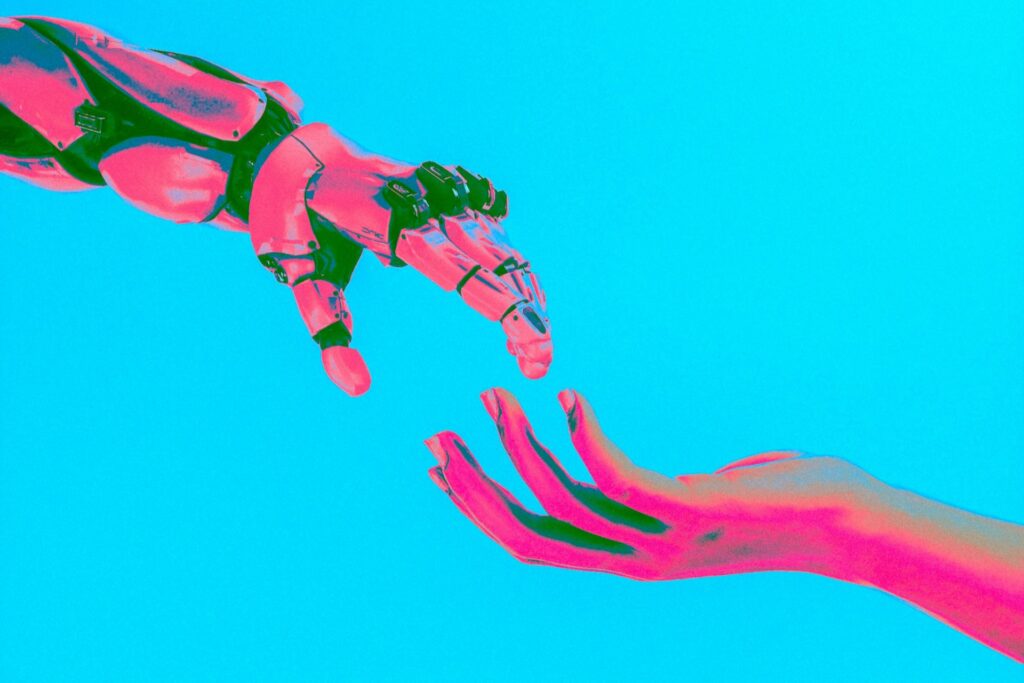
The AI Alternative: A Different Kind of Retreat
While some companies flee technology, others double down… specifically on AI that promises to prepare, guide, or even stand in for human connection.
These apps usually follow the same script: you chat with an AI assistant with a friendly name. It asks questions, helps refine your profile, coaches your messages, or even speaks to matches on your behalf to “break the ice.”
The theory is understandable. Dating is emotionally hard. People feel anxious, awkward, overwhelmed. An AI companion is endlessly patient, never judgmental, always available. It feels safer than risking rejection from a real person.
And to be fair, support isn’t the problem.
What we’re asking AI to do is.
Why AI Isn’t Ready for This Work
I’ve tested AI systems extensively… across models, across versions and for tasks far simpler than understanding human emotional nuance. And the truth keeps surfacing:
It’s just not ready.
Humans are walking contradictions. We say one thing and mean another. We perform identities we think will make us lovable, then feel disconnected from the people who respond. We’re bundles of history, fear, desire, and half-conscious patterns.
Understanding someone isn’t about cataloging what they say. It’s about sensing what doesn’t align.
When someone calls themselves “nonchalant” but checks their phone every five minutes.
When someone says they don’t want anything serious but flinches at emotional distance.
When confidence is actually armor.
This kind of understanding comes from lived experience. From having been hurt, misread, afraid, hopeful. AI can process language. It can detect patterns. But it cannot feel the dissonance between words and energy.
It cannot sense the soul of a person… the parts they haven’t articulated yet.
The Performance Trap in Modern Dating
Here’s what makes AI-assisted dating uniquely dangerous: it doesn’t just misunderstand people. It encourages them to perform.
An AI matchmaker designed to optimize dating success doesn’t ask, “What do you feel?”
It asks, “What will work?”
You don’t become more yourself. You become more effective.
Smoother messages. Better openers. Higher response rates.
And less honesty.
This is the opposite of what struggling daters need. The problem isn’t that people don’t know what to say. It’s that they’ve become so focused on saying the right thing that they’ve lost touch with what they actually want to express.
AI matchmakers can polish your performance.
It cannot help you stop performing.
What We’re Actually Avoiding
Both trends… the return to events and the rise of AI companions—are reactions to the same truth: digital dating feels hollow.
But neither addresses the root issue.
The problem isn’t that apps exist.
It’s that we built them to optimize everything except emotional awareness.
We reward speed over patience. Volume over depth. Engagement over honesty. We treat people like auditions instead of humans. We chase matches instead of understanding ourselves well enough to recognize what we actually need.
Events and AI are scaffolding around a cracked foundation.
They keep the structure standing but they don’t fix what’s broken.
What Depth Actually Requires
Real connection requires something no system can manufacture: internal clarity.
You can put someone in a room full of eligible people and they’ll still repeat the same patterns. You can coach someone through flawless messages and they’ll still panic when things get real.
Because the issue isn’t tools.
It’s unexamined fear.
Ghosting isn’t a tech problem. It’s an avoidance problem.
Surface-level chat isn’t a communication problem. It’s a vulnerability problem.
The work happens internally… when people notice their patterns and choose to interrupt them. When they sit with discomfort instead of escaping it. When they learn the difference between chemistry and compatibility.
Technology can support this but only if it slows us down instead of speeding us up.

What Technology Could Do
Imagine a dating app that didn’t push you to swipe faster or juggle five conversations.
What if it helped you understand why you’re drawn to someone?
What if it helped you notice who you keep choosing and who you keep avoiding?
What if it created pauses for reflection instead of endless momentum?
Not AI trying to understand you.
Technology helping you understand yourself.
That’s the philosophy behind Sentio: awareness over optimization. Reflection over performance. Depth over velocity.
The Line AI Can’t Cross
AI wants coherence. Humans aren’t coherent.
We want connection and fear it. We crave intimacy and resist it. We present certainty while swimming in doubt. Any system that tries to resolve these contradictions misses the point.
The danger isn’t that AI doesn’t understand us.
It’s that it might convince us that it does.
And false understanding is worse than none at all because it stops the deeper work from happening.
The Real Work
No event, no algorithm, no assistant can do this for us.
The work is noticing why you’re drawn to emotional unavailability.
Recognizing when you’re performing instead of being honest.
Sitting with uncertainty long enough to learn from it.
Technology can either help us avoid this work or support us in doing it.
Most systems choose avoidance.
Sentio chooses honesty.
Not the promise of an easier path but the commitment to a more human one.